Painted Hydrangeas: How a Colombian Grower Makes Colour Look Natural
It starts with a white flower
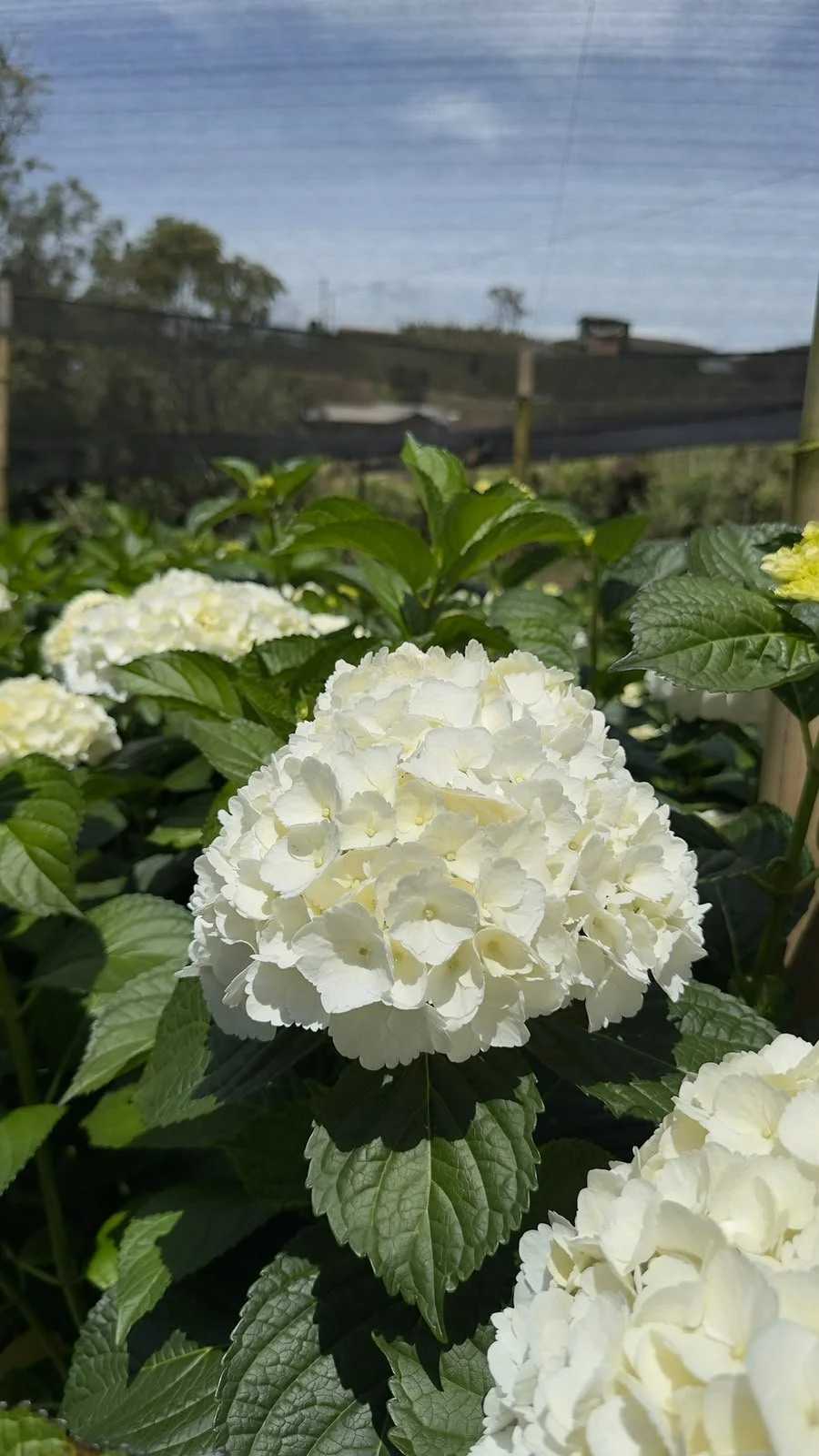
Every painted hydrangea begins as a natural one. At Fresh Gardens that base comes from our own fields in La Ceja, Colombia — mostly White, sometimes Green Pale or Green Emerald depending on the target colour.
That matters more than it sounds. The quality of a tinted hydrangea is capped by the quality of the flower underneath it. A head with uneven florets or thin petals doesn't improve with colour; the colour just makes the flaws easier to see. Growing our own base means we choose which heads go to tinting rather than taking what a third party sends us.
Timing is most of the craft
Hydrangea petals don't take colour the same way at every stage. Too early and the flower keeps developing, pulling the tone in a direction you didn't choose. Too late and the petal has hardened and the colour sits on the surface instead of settling into it.
The window is narrow and it moves with the weather. Getting it right is a matter of reading the crop daily, not following a calendar. That's many years of accumulated judgement, and it's the part that can't be bought.
Why our colours read as natural
The most common objection florists raise about tinted flowers is that they look tinted — flat, saturated, obviously artificial under photography.
Three things prevent that:
Gradient, not flatness. A real hydrangea head is never one colour. Florets near the centre differ from those at the edge. Our technique preserves that variation instead of burying it under a uniform coat.
Restraint on saturation. It's easy to go louder. Loud photographs badly and dates fast. We build colour to the point where it reads as a real bloom and stop.
The petal keeps its texture. Over-treatment stiffens a petal and kills the light that moves through it. Ours stay soft.
We developed these techniques on our own farm. They aren't available elsewhere, and they're the reason buyers who compare samples side by side tend to notice ours before we say anything.
Where painted hydrangeas actually get used
Weddings and events — designers working to a specific palette can't wait for a natural colour that may not exist. Terracota, Quicksand, Slipper Satin and Nude were developed for exactly this.
Seasonal programmes — Valentine's, Mother's Day, Christmas. Reds, deep pinks and greens with gold move volume in narrow windows.
Pink in all its forms — pink is the widest part of our range. Rebeca Pink, Wedding Pink, French Rose, Bubble Gum Pink, Parisian Pink, Citrus Pink and more. Some are natural, most are tinted, and all of them ship in the same four head sizes.
Custom colour — if you work to a brand palette, we can develop to it. Ask us.
Hydrangea farm in Antioquia, Colombia, where our painted hydrangeas are grown and tinted
Four questions worth asking any supplier
If you're comparing painted hydrangea suppliers, these separate growers from resellers quickly:
Do you grow the base flower or buy it? If they buy it, they don't control the input.
What head sizes do you offer, and how are they graded? Ours: Mini 7–9 cm, Select 15–16 cm, Premium 19–20 cm, Jumbo 22 cm, graded against physical gauges.
How many stems per box, by grade? Vagueness here means surprises later. Ours are published on our specs page.
Can you repeat this colour in six months? A one-off batch is easy. Consistency across a year is the actual test.
We ship painted and natural hydrangeas to more than 30 countries, and we'd rather you asked hard questions before ordering than after.
See the full range: our hydrangea catalog has over 150 colours organised by season and occasion.
Talk to us: WhatsApp +57 300 548 5598 or sales@freshgardenscol.com. Tell us the colour, the sizes and the dates — we'll come back with availability.